
Public Education or Public Indoctrination?
Why governments really created public schools (Spoiler alert: it wasn't to help your children learn)

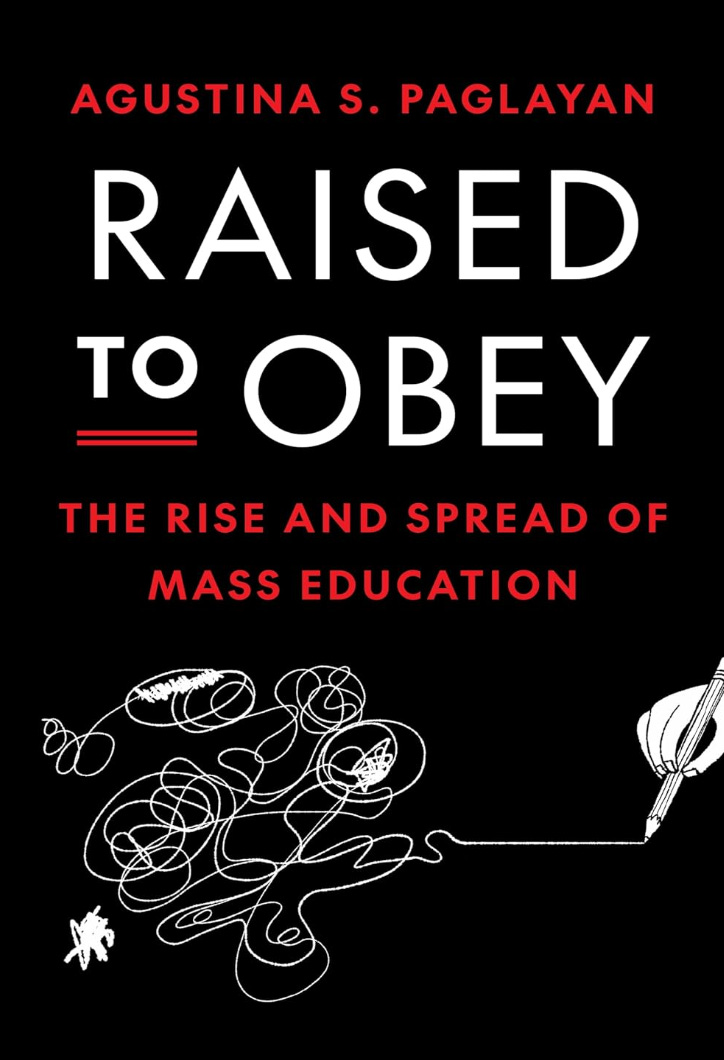
Taking a break from the “Schools and Schooling” series to review a book that truly rocked my world. I encourage you to check out Dr. Paglayan’s research and watch some of her interviews. This interview is about the book itself and provides an excellent summary.
The book is being awarded the 2025 J. David Greenstone Book Prize for the best book in politics and history (announced on X in early August)
The Uncomfortable Truth
What if the reason governments invest in education is not what we think?
This past summer I read some of the research being done by Dr. Agustina Paglayan, a political science professor at UC San Diego.
She uncovered a disturbing reality in her groundbreaking book Raised to Obey: The Rise and Spread of Mass Education. Her research reveals that governments didn't create public schools to educate children. They created them to control them.
This isn't some fringe conspiracy theory. It's a meticulously researched analysis backed by extensive historical data that challenges everything we think we know about why schools exist.
Learning from the past is her modus operandi, which I love.
I also love the fact that she has published all her data online.
As I read through the book I was shocked by the eccentricity of her claims paired with the thoroughness of her research. Let me know what you think.
The Standard Story Doesn't Add Up
Political scientists have long identified three tools governments use to maintain social order:
Violent repression (police, military)
Concessions to the masses (welfare, rights)
Indoctrination (controlling minds and beliefs)
For decades, experts classified public education as a "concession, " a government gift to disadvantaged people to help them climb the social ladder. But Paglayan's research proves this narrative is fundamentally wrong.
Instead, she demonstrates that public education emerged as a sophisticated tool of indoctrination, designed to create obedient citizens who wouldn't challenge state authority.
If schools were really designed to create informed, critical thinkers, why are they failing so spectacularly? The Nation's Report Card and international PISA scores consistently show disappointing results across well-funded public systems.
According to Paglayan, this "failure" makes perfect sense: real education was never the primary goal.
The Pattern Is Clear: Violence First, Schools Second
Here's what the historical record shows:
In 1800: Only 10% of countries worldwide provided public primary education By 1900: That number had tripled to 30% Today: Over 90% of countries have public primary education systems
What drove this massive shift? Not democracy, industrialization, or immigration concerns but internal violence and social unrest.
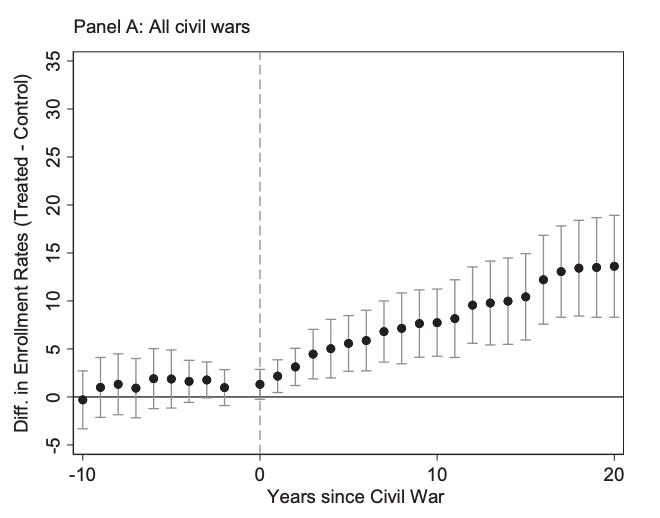
Paglayan examined the historical timeline across dozens of countries and found a consistent pattern: civil wars, uprisings, and social unrest consistently preceded the establishment of public education systems.
The evidence is stark. She analyzed twenty-three countries that experienced civil wars between 1828-2010 and discovered:
Primary school enrollment grew twice as fast in the twenty years after civil war compared to before
War-stricken countries increased enrollment 10% more than peaceful nations during the same periods
The message is unmistakable: Governments built schools in response to threats, not opportunities.
The Four Conditions for Educational Control
Paglayan identified exactly when and why governments turn to educational indoctrination. All four conditions must be present:
The government sees a threat to social order
Officials believe schools can instill obedience to state authority
The government expects to stay in power long enough to benefit from indoctrination
The state has sufficient resources to fund educational reforms
When these conditions align with internal conflict, the governments of countries she studied invariably turned to public education as a tool of social control.
America's Origin Story: From Rebellion to Classroom Control
So, governments invested in education after civil wars and social unrest, but why? For what purpose? Paglayan demonstrates through historical research that it was in order to create obedient, docile citizens.
The United States provides a perfect case study of this pattern in action.
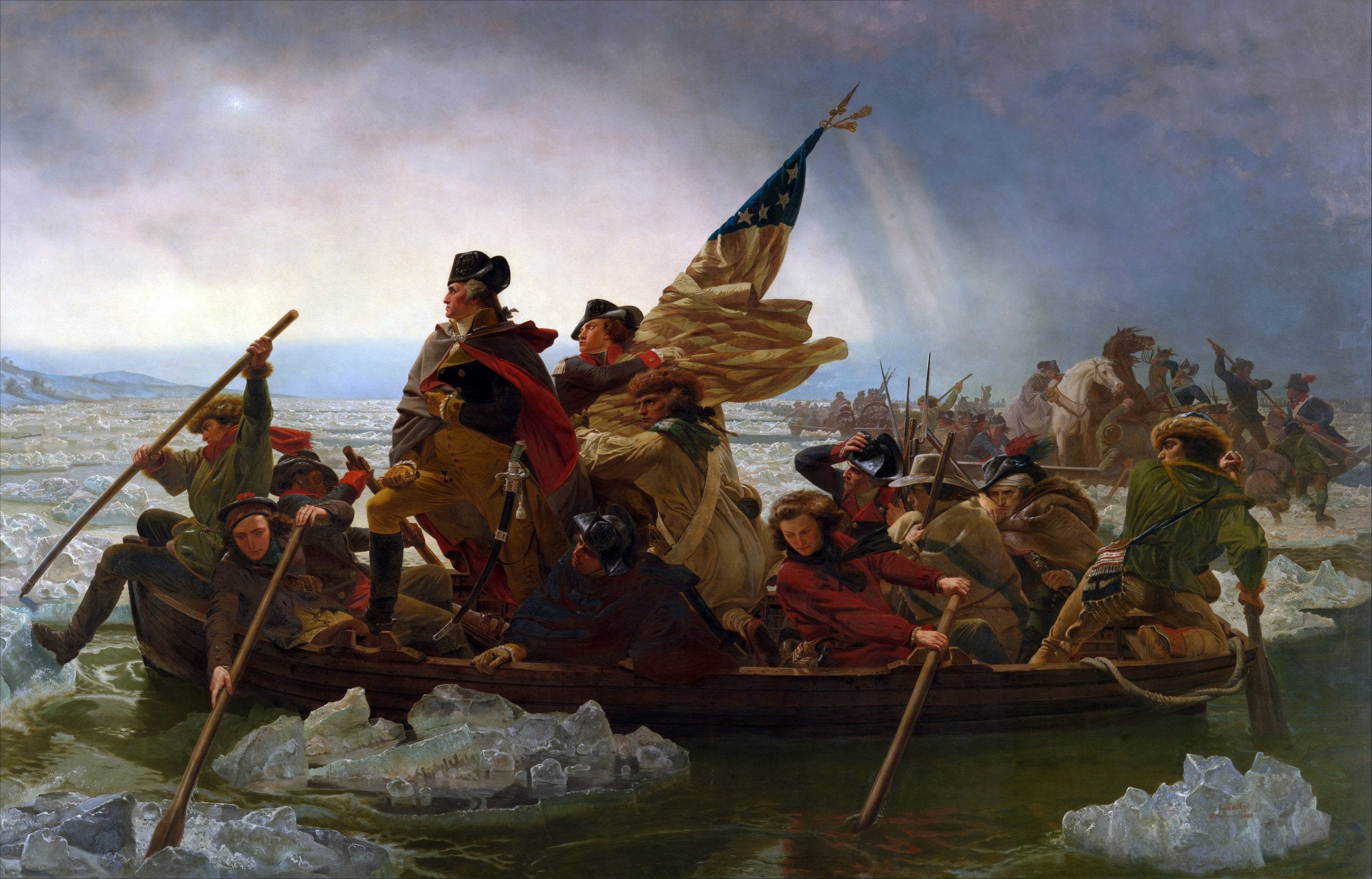
After the Revolutionary War (1776-1783), some leaders viewed public education as a way to shape citizens' moral character. But the real catalyst came with Shays' Rebellion in Massachusetts (1786-1787), when armed farmers rose up against economic oppression.
Thomas Jefferson's response was telling. In a letter to James Madison reflecting on the rebellion, he wrote:
"Educate and inform the whole mass of the people, enable them to see that it is their interest to preserve peace and order, and they will preserve it."
Translation: Use schools to convince people that obedience serves their interests.
Massachusetts got the message. In 1789, just two years after Shays' Rebellion, the state passed its first law on public education, publicly funding "common schools." The pattern was set.
Indoctrinating by Design and Proud of It
Here's something that might shock modern readers: 18th and 19th-century education reformers openly embraced indoctrination as a goal.
Paglayan defines indoctrination as "the process of teaching a person or group to accept a set of beliefs uncritically." While this term carries negative connotations today, historical reformers spoke proudly about indoctrinating children to serve state interests.
She analyzed countless primary sources—speeches by educational reformers, school textbooks, policy documents—and found consistent themes. Officials explicitly stated their goal: replace religious loyalty with state loyalty, swap priests for state-certified teachers, and transform churches into government-regulated schools.
As I described in a previous post, we inherited most of the structure present in schools today from Prussia, which was indoctrinating by design.
As Paglayan puts it:
"These systems were designed to fulfill a task that churches had been fulfilling for centuries: to mold children's hearts and minds to make them loyal subjects—but loyalty to God was replaced by loyalty to the state, the priest became a teacher certified by the state, and the temple became a school regulated and inspected by the state."
The Uncomfortable Questions
Paglayan carefully avoids making explicit moral judgments about these historical motivations. She doesn't directly connect past indoctrination goals to modern educational failures. But the implications are impossible to ignore.
If public education systems were designed primarily for indoctrination rather than learning, several uncomfortable questions emerge:
Has the fundamental motivation changed? Do modern governments still view schools primarily as tools of social control rather than intellectual development?
Why do well-funded systems consistently underperform? If the goal was never really education, persistent academic failure isn't a bug. It's an intentional feature.
Who should control children's education? If governments established schools to serve state interests rather than student needs, should we trust them with the souls of children?
The Choice Before Us
Paglayan's research doesn't offer easy answers, but it provides crucial context for understanding why our educational system functions as it does. The historical evidence is clear: public education emerged as a response to government fear, not democratic idealism.
We need to acknowledge an uncomfortable truth: the system might not be broken at all. It might be working exactly as originally intended.
This research suggests that studying the origins of our educational structures might help us understand how to fix our broken system. But first, we need to acknowledge an uncomfortable truth: the system might not be broken at all. It might be working exactly as originally intended.
The question isn't whether public education has failed to educate effectively but whether effective education was ever really the goal.
If it wasn't then, why should we assume it is now?
The implications of Paglayan's book extend far beyond academic research. They force us to reconsider who should educate our children and why. The evidence suggests that when it comes to public education, we may need to choose between state control and genuine learning.
Recommended Resources
This interview is about the book itself and provides an excellent summary.
Paglayan, Agustina S. “Education or Indoctrination? The Violent Origins of Public School Systems in an Era of State-Building.” American Political Science Review 116, no. 4 (2022): 1242–57. (pdf)
Paglayan, Agustina S. “The Non-Democratic Roots of Mass Education: Evidence from 200 Years.” American Political Science Review 115 no. 1 (2021): 179-198. (pdf)
One thing that also needs to be clear is that the interests of nations are tied to the interests of elites. So when I talk about national mythologies I'm really talking about the mythologies that supported the status quo of that elite. Which is the main reason that US education (and Western education in general) was built around the process of seperating out an elite from the masses and justifying that separation. The process was finally accepted due to a combination of legal force, enclosure of credentials foro economic success, and the promise of a merit-based path to raise one's children into the elite. It also promised equality, and unity - which is in basic conflict to its divisive goals. We're seeing that today.
All of its promises were based on the imagined justifications of elites as to why it was righteous to enforce compliance from the masses. The narratives were never based on objective truths or a desire to give more agency to non-elites, but on self-righteous fictions.
I have been gathering courage to write about this for years now - not about Paglayan's research in particular, which I haven't gotten to yet, (I'm expecting it to support my understanding rather than change it)- but about the real role of compulsory schooling in our international global order. It's been frustrating to see so much written about the way schools have failed - how they're anachronistic in our technologically advanced era, about project based learning vs. rote learning, about the influence of teacher's unions, about the need for evidence-based practices, about too much standardization, or the wrong standards, or the coddling of students, or the wrong modes of discipline, etc., etc .. Most narratives about education touch small truths but completely miss the more essential truth: Compulsory schooling wasn't created to serve the needs of its students, it was created to solidify the nation. Compulsory schooling is a characteristic of nation states. It's main purpose is to embed the national mythology that a nation's identity and culture are built on in order to validate the authority wielded by that nation's government. This is why compulsory schooling only gets fully realized when national cohesion is threatened by major disruption, either internal or external.
I know this is a clumsy simplification, which is why I want to write about it in much more depth. We can't improve an institution if we fail to understand its actual purpose. Once we do understand, we may decide this particular institution isn't what we need at all.